More Fake News About Donald Trump: A Compliation
From the blog of Sharyl Attkisson, a post titled “52 Media Mistakes in the Trump Era: The Definitive List.” A “mistake” might imply normal human fallibility, but the overwhelming majority of the mistakes are in an anti-Trump direction. They are not random incompetence. They are the result of a pervasive bias against Donald Trump.
We can’t repeat them all here (please read the entire list), but we can mention a few of the most serious ones.
1. Aug. 2016-Nov. 2016:
The New York Post published modeling photos of Trump’s wife Melania and reported they were taken in 1995. Various news outlets relied on that date to imply that Melania—an immigrant—had violated her visa status. But the media got the date wrong. Politico was among the news agencies that later issued a photo date correction.
7. Jan. 20, 2017:
Zeke Miller of TIME reported that President Trump had removed the bust statue of civil rights leader Martin Luther King Jr. from the Oval Office. The news went viral. It was false.
8. Jan. 26, 2017:
Josh Rogin of the Washington Post reported that the State Department’s “entire senior administrative team” had resigned in protest of Trump. A number of media outlets ranging from politically left to right, including liberal-leaning Vox, stated that claim was misleading or wrong.
12. Feb. 2, 2017:
AP reported that Trump had threatened the president of Mexico with invasion to get rid of “bad hombres.” Numerous publications followed suit. The White House said it wasn’t true and the Washington Post removed the AP info that “could not be independently confirmed.”
14. Feb. 14, 2017:
The New York Times’ Michael S. Schmidt, Mark Mazzetti and Matt Apuzzo reported about supposed contacts between Trump campaign staff and “senior Russian intelligence officials.” Comey later testified “In the main, [the article] was not true.”
15. Feb. 22, 2017:
ProPublica’s Raymond Bonner reported CIA official Gina Haspel—Trump’s later pick for CIA Director—was in charge of a secret CIA prison where Islamic extremist terrorist Abu Zubaydah was waterboarded 83 times in one month, and that she mocked the prisoner’s suffering. More than a year later, ProPublica retracted the claim, stating that “Neither of these assertions is correct…Haspel did not take charge of the base until after the interrogation of Zubaydah ended.”
17. May 10, 2017:
Multiple outlets including Politico, the New York Times, the Washington Post, CNN, AP, Reuters and the Wall Street Journal reported the same leaked information: that Trump fired FBI Director James Comey shortly after Comey requested additional resources to investigate Russian interference in the election. [. . .] The Justice Department, Deputy Attorney General Rod Rosenstein and Acting FBI Director Andrew McCabe said the media reports were untrue and McCabe added that the FBI’s Russia investigation was “adequately resourced.”
18. June 4, 2017:
NBC News reported in a Tweet that Russian President Vladimir Putin told TV host Megan Kelly that he had compromising information about Trump. Actually, Putin said the opposite: that he did not have compromising information on Trump.
22. June 22, 2017:
CNN’s Thomas Frank reported that Congress was investigating a “Russian investment fund with ties to Trump officials.” The report was later retracted. Frank and two other CNN employees resigned in the fallout.
23. December 2, 2017:
ABC News’ Brian Ross reported that former Trump official Lt. Gen. Michael Flynn was going to testify that candidate Trump had directed him to contact “the Russians.” Even though such contact would not be in of itself a violation of law, the news was treated as an explosive indictment of Trump in the Russia collusion narrative, and the stock market fell on the news. ABC later corrected the report to reflect that Trump had already been elected when he reportedly asked Flynn to contact the Russians about working together to fight ISIS and other issues. Ross was suspended.
27. Sept. 5, 2017:
CNN’s Chris Cillizza and other news outlets declared Trump “lied” when he stated that Trump Tower had been wiretapped, although there’s no way any reporter independently knew the truth of the matter—only what intel officials claimed. It later turned out there were numerous wiretaps involving Trump Tower, including a meeting of Trump officials with a foreign dignitary. At least two Trump associates who had offices in or frequented Trump Tower were also wiretapped.
29. Nov. 6, 2017:
CNN’s Daniel Shane edited excerpts from a Trump event to make it seem as though Trump didn’t realize Japan builds cars in the U.S. However, Trump’s entire statement made clear that he does.
35. Dec. 8, 2017:
CNN’s Manu Raju and Jeremy Herb reported that Donald Trump Jr. conspired with WikiLeaks in advance of the publication of damaging Democrat party and Clinton campaign emails. Many other publications followed suit. They had the date wrong: WikiLeaks and Trump Junior were in contact after the emails were published.
40. March 8, 2018:
The New York Times’ Jan Rosen reported on a hypothetical family whose tax bill would rise nearly $4,000 under Trump’s tax plan. It turns out the calculations were off: the couple’s taxes would go actually go down $43; not up $4,000.
44. April 30, 2018:
AP reported that the NRA had banned guns during Trump and Pence speeches at the NRA’s annual meeting. AP later corrected the information because the ban had been put in place by Secret Service.
46. May 7, 2018:
CNBC’s Kevin Breuninger reported that Trump’s personal lawyer, Cohen, paid $1 million in fines related to unauthorized cars in his taxi business, had been barred from managing taxi medallions, had transferred $60 million offshore to avoid paying debts, and is awaiting trial on charges of failing to pay millions in taxes. A later correction stated that none of that was true.
47. May 16, 2018:
The New York Times’ Julie Hirschfeld Davis, AP, CNN’s Oliver Darcy and others excerpted a Trump comment as if he had referred to immigrants or illegal immigrants generally as “animals.” Most outlets corrected their reports later to note that Trump had specifically referred to members of the murderous criminal gang MS-13.
48. May 28, 2018
The New York Times’ Magazine editor-in-chief Jake Silverstein and CNN’s Hadas Gold shared a story with photos of immigrant children in cages as if they were new photos taken under the Trump administration. The article and photos were actually taken in 2014 under the Obama administration.
49. May 29, 2018
The New York Times’ Julie Davis reported the estimated size of a Trump rally to be 1,000 people. There were actually 5,500 people or more in attendance.
51. June 21, 2018
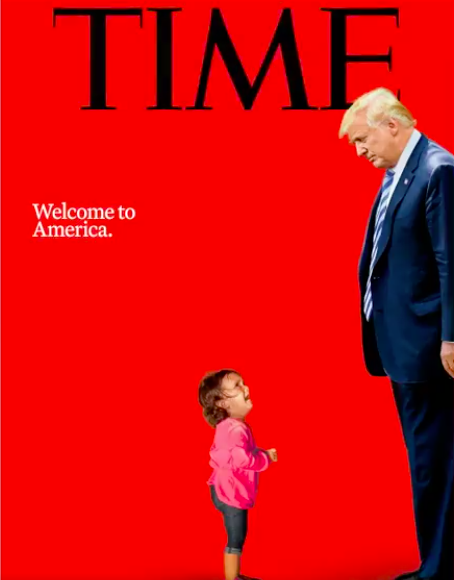
Time magazine and others used a photo of a crying Honduran child to illustrate a supposed Trump administration policy separating illegal immigrant parents and children. The child’s father later reported that agents had never separated her from her mother; the mother had taken her to the US without his knowledge and separated herself from her other children, whom she left behind.
One or two others represent honest assessments that turned out to be wrong, for example 3. (“In a Washington Post piece not labelled opinion or analysis, Stuart Rothenberg reported that Trump’s path to an electoral college victory was ‘nonexistent.’”). Rothenberg, a relatively sober analyst, was probably fairly describing the data he had at the time.
But the vast majority of examples Attkisson cites are not random errors, the result of the fact that journalists are fallible. They are evidence of a mainstream media keen to find, and disinclined to check out, anything that reflects badly on Donald Trump.
We can’t repeat them all here (please read the entire list), but we can mention a few of the most serious ones.
1. Aug. 2016-Nov. 2016:
The New York Post published modeling photos of Trump’s wife Melania and reported they were taken in 1995. Various news outlets relied on that date to imply that Melania—an immigrant—had violated her visa status. But the media got the date wrong. Politico was among the news agencies that later issued a photo date correction.
7. Jan. 20, 2017:
Zeke Miller of TIME reported that President Trump had removed the bust statue of civil rights leader Martin Luther King Jr. from the Oval Office. The news went viral. It was false.
8. Jan. 26, 2017:
Josh Rogin of the Washington Post reported that the State Department’s “entire senior administrative team” had resigned in protest of Trump. A number of media outlets ranging from politically left to right, including liberal-leaning Vox, stated that claim was misleading or wrong.
12. Feb. 2, 2017:
AP reported that Trump had threatened the president of Mexico with invasion to get rid of “bad hombres.” Numerous publications followed suit. The White House said it wasn’t true and the Washington Post removed the AP info that “could not be independently confirmed.”
14. Feb. 14, 2017:
The New York Times’ Michael S. Schmidt, Mark Mazzetti and Matt Apuzzo reported about supposed contacts between Trump campaign staff and “senior Russian intelligence officials.” Comey later testified “In the main, [the article] was not true.”
15. Feb. 22, 2017:
ProPublica’s Raymond Bonner reported CIA official Gina Haspel—Trump’s later pick for CIA Director—was in charge of a secret CIA prison where Islamic extremist terrorist Abu Zubaydah was waterboarded 83 times in one month, and that she mocked the prisoner’s suffering. More than a year later, ProPublica retracted the claim, stating that “Neither of these assertions is correct…Haspel did not take charge of the base until after the interrogation of Zubaydah ended.”
17. May 10, 2017:
Multiple outlets including Politico, the New York Times, the Washington Post, CNN, AP, Reuters and the Wall Street Journal reported the same leaked information: that Trump fired FBI Director James Comey shortly after Comey requested additional resources to investigate Russian interference in the election. [. . .] The Justice Department, Deputy Attorney General Rod Rosenstein and Acting FBI Director Andrew McCabe said the media reports were untrue and McCabe added that the FBI’s Russia investigation was “adequately resourced.”
18. June 4, 2017:
NBC News reported in a Tweet that Russian President Vladimir Putin told TV host Megan Kelly that he had compromising information about Trump. Actually, Putin said the opposite: that he did not have compromising information on Trump.
22. June 22, 2017:
CNN’s Thomas Frank reported that Congress was investigating a “Russian investment fund with ties to Trump officials.” The report was later retracted. Frank and two other CNN employees resigned in the fallout.
23. December 2, 2017:
ABC News’ Brian Ross reported that former Trump official Lt. Gen. Michael Flynn was going to testify that candidate Trump had directed him to contact “the Russians.” Even though such contact would not be in of itself a violation of law, the news was treated as an explosive indictment of Trump in the Russia collusion narrative, and the stock market fell on the news. ABC later corrected the report to reflect that Trump had already been elected when he reportedly asked Flynn to contact the Russians about working together to fight ISIS and other issues. Ross was suspended.
27. Sept. 5, 2017:
CNN’s Chris Cillizza and other news outlets declared Trump “lied” when he stated that Trump Tower had been wiretapped, although there’s no way any reporter independently knew the truth of the matter—only what intel officials claimed. It later turned out there were numerous wiretaps involving Trump Tower, including a meeting of Trump officials with a foreign dignitary. At least two Trump associates who had offices in or frequented Trump Tower were also wiretapped.
29. Nov. 6, 2017:
CNN’s Daniel Shane edited excerpts from a Trump event to make it seem as though Trump didn’t realize Japan builds cars in the U.S. However, Trump’s entire statement made clear that he does.
35. Dec. 8, 2017:
CNN’s Manu Raju and Jeremy Herb reported that Donald Trump Jr. conspired with WikiLeaks in advance of the publication of damaging Democrat party and Clinton campaign emails. Many other publications followed suit. They had the date wrong: WikiLeaks and Trump Junior were in contact after the emails were published.
40. March 8, 2018:
The New York Times’ Jan Rosen reported on a hypothetical family whose tax bill would rise nearly $4,000 under Trump’s tax plan. It turns out the calculations were off: the couple’s taxes would go actually go down $43; not up $4,000.
44. April 30, 2018:
AP reported that the NRA had banned guns during Trump and Pence speeches at the NRA’s annual meeting. AP later corrected the information because the ban had been put in place by Secret Service.
46. May 7, 2018:
CNBC’s Kevin Breuninger reported that Trump’s personal lawyer, Cohen, paid $1 million in fines related to unauthorized cars in his taxi business, had been barred from managing taxi medallions, had transferred $60 million offshore to avoid paying debts, and is awaiting trial on charges of failing to pay millions in taxes. A later correction stated that none of that was true.
47. May 16, 2018:
The New York Times’ Julie Hirschfeld Davis, AP, CNN’s Oliver Darcy and others excerpted a Trump comment as if he had referred to immigrants or illegal immigrants generally as “animals.” Most outlets corrected their reports later to note that Trump had specifically referred to members of the murderous criminal gang MS-13.
48. May 28, 2018
The New York Times’ Magazine editor-in-chief Jake Silverstein and CNN’s Hadas Gold shared a story with photos of immigrant children in cages as if they were new photos taken under the Trump administration. The article and photos were actually taken in 2014 under the Obama administration.
49. May 29, 2018
The New York Times’ Julie Davis reported the estimated size of a Trump rally to be 1,000 people. There were actually 5,500 people or more in attendance.
51. June 21, 2018
Time magazine and others used a photo of a crying Honduran child to illustrate a supposed Trump administration policy separating illegal immigrant parents and children. The child’s father later reported that agents had never separated her from her mother; the mother had taken her to the US without his knowledge and separated herself from her other children, whom she left behind.
Conclusion
A few of the items on Attkisson’s list are fairly trivial, such as 16. (“An article bylined by the New York Times’ graphic editors Karen Yourish and Troy Griggs referred to Trump’s daughter, Ivanka, as Trump’s wife.”)One or two others represent honest assessments that turned out to be wrong, for example 3. (“In a Washington Post piece not labelled opinion or analysis, Stuart Rothenberg reported that Trump’s path to an electoral college victory was ‘nonexistent.’”). Rothenberg, a relatively sober analyst, was probably fairly describing the data he had at the time.
But the vast majority of examples Attkisson cites are not random errors, the result of the fact that journalists are fallible. They are evidence of a mainstream media keen to find, and disinclined to check out, anything that reflects badly on Donald Trump.
Labels: AP, Associated Press, CNN, Donald Trump, Fake News, Liberal Bias, Mainstream Media, Media Bias, Sharyl Attkisson
posted by John McAdams at 7:42 PM
9 comments


